
At a Glance
- Obliquebanded leafroller (OBLR) is a common pest in apple and pear orchards.
- Larval feeding can damage leaves and developing fruit.
- Fruit damage may appear as small pin‑prick holes or large distortions.
- Damaged fruit is often unmarketable, reducing pack‑out returns.
- OBLR can have two generations per year, requiring season‑long monitoring.
- The BC DAS system helps track development stages and optimize control timing.
Why Is OBLR a Problem?
Leafrollers, including obliquebanded leafroller (OBLR), are common pests in tree fruit orchards. Larvae damage developing leaves and green tissue through their characteristic leaf‑rolling behaviour and also feed directly on the fruit.
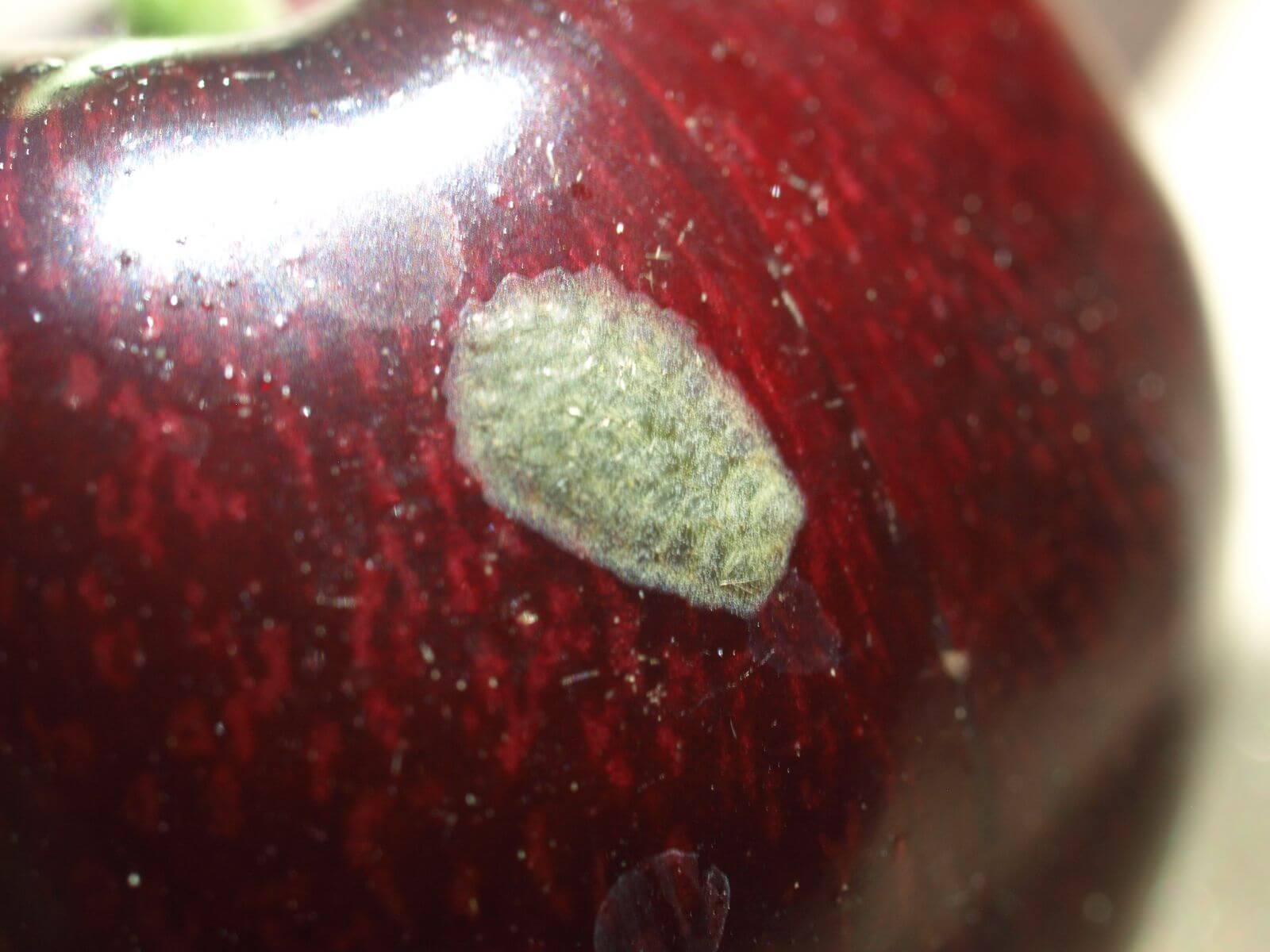
Fruit feeding damage is the main concern for growers. Early‑season feeding can cause significant malformations that affect the entire shape of the fruit, while later feeding during the summer often appears as small pin‑prick injuries. Both types of damage can render fruit unmarketable and reduce returns from the packinghouse.
Where Do Leafrollers Come From?
Leafroller larvae overwinter on trees and become active as trees break dormancy in spring. Developing leafrollers can be detected by scouting for egg masses, feeding damage on buds and shoots, or larvae themselves.
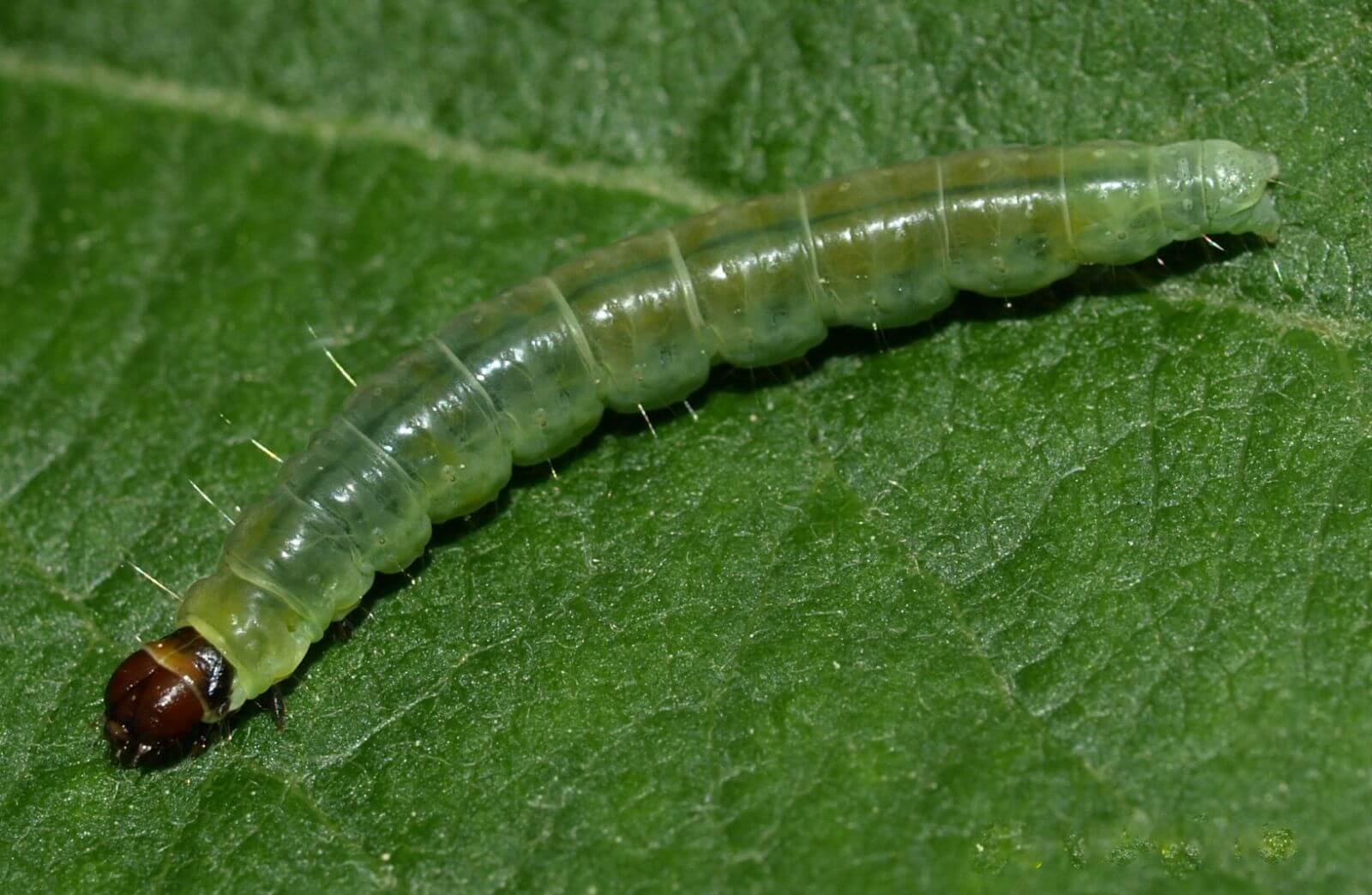
OBLR larvae are large, worm‑like caterpillars with pairs of small fore‑ and hind‑legs. They can be identified by a light‑coloured band on a black head capsule and a pale yellow‑green body. Mature larvae develop into greyish moths.
Species such as OBLR and bud moth typically have two generations per year, while fruit tree and European leafrollers usually have one. As a result, leafroller populations can be a concern from green tip through petal fall and again during the summer as fruit develops. For OBLR, monitoring should include tracking the second generation, which usually occurs in July and August.
How the BC DAS System Helps
The BC DAS system helps growers stay informed about current larval development stages of leafrollers based on their specific orchard location. Using degree‑day accumulation from selected local weather stations, the system estimates population development throughout the season.
Model outputs include information such as instar distribution, pupal development, temperature trends, and short‑term forecasts. These data prompt alerts when leafrollers are most susceptible and help growers optimize the timing of control measures.
The BC DAS system also provides information on natural enemies of leafrollers, allowing growers to make informed decisions that minimize disruption to beneficial insect populations in the orchard.
Support for Leafroller Management
Control recommendations are integrated into the OBLR model within BC DAS. When larval development reaches optimal stages for management, growers can access the DAS Spray Guide for spray options, rates, and timing information.
The Spray Guide supports planning for multiple pests and allows filtering for products registered for conventional or organic use. By following the BC DAS OBLR model, growers have timely access to both development information and management tools to help reduce leafroller damage throughout the season. For more information, please visit the Tree Fruit Production Guide.
Learn More (Video)
Interested in finding out more? Check out the BC DAS OBLR model video on YouTube to see how field observations connect with the online DAS program.