Monitoring for Little Cherry Disease and Western X
Please take time to monitor your orchards for symptoms of Little Cherry Disease (LChD) and Western X phytoplasma, both of which continue to threaten cherry production in B.C.
The best time to collect samples is one week before harvest through mid‑August.
Key Symptoms to Watch For
- Small, poorly coloured fruit that is bland or bitter
- Delayed or uneven ripening
- Symptoms appearing on individual limbs or localized areas
- Affected fruit remaining clustered and hanging late into the season
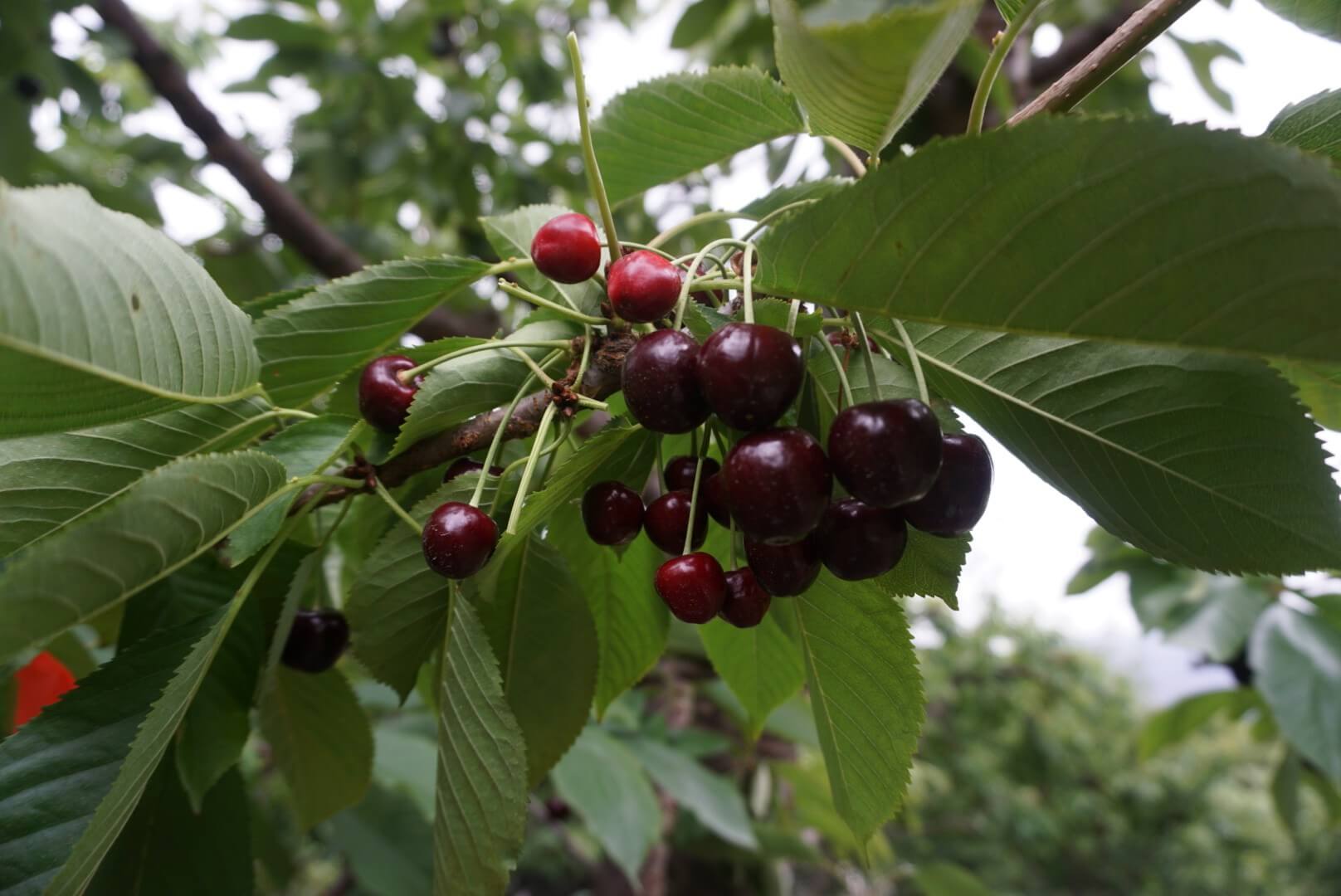
Sampling and Marking Trees
If you see a tree with branches yielding small, misshapen, or bitter fruit, please flag or mark the tree for sampling and contact your horticulturist or the Ministry of Agriculture.
Leaf samples can be collected for laboratory analysis to confirm the presence or absence of these diseases.
If you suspect a tree may be infected, use flagging tape to clearly mark:
- The tree trunk
- The specific branch where symptoms were observed
Marking trees before harvest helps streamline the sampling process and improves the efficiency of field work during this critical period.
Additional Resources
For more detailed information on Little Cherry Disease, symptoms, and sampling procedures, see the resource below from the BC Ministry of Agriculture and Food.
Little Cherry Disease – Technical Guide (PDF)
View or download the BC Ministry of Agriculture and Food resource